Hello, my name is Isaac, I study Social Science. My topic is my file of study, I will do 20 glossaries about my topic to help peoples to understand my topic.
Biodiversity
Noun
Biodiversity is all the different kinds of life you'll find in one area—the variety of animals, plants, fungi, and even microorganisms like bacteria that make up our natural world. Each of these species and organisms work together in ecosystems, like an intricate web, to maintain balance and support life.
Example: The world has an impressive biodiversity
en: Biodiversité
Cold War
Noun
The Cold War was a period of geopolitical tension between the United States and the Soviet Union and their respective allies, the Western Bloc and the Eastern Bloc, which began following World War II.
Example: The cold war was a big conflict oppenent the United States against the russia.
en: Guerre froide
Community
Noun
A community is a social unit with commonality such as norms, religion, values, customs, or identity. Communities may share a sense of place situated in a given geographical area or in virtual space through communication platforms.
Example: The community is changing every day.
en: Communauté
Country
Noun
A country is a distinct territorial body or political entity.[1] It may be an independent sovereign state or part of a larger state,[2] as a non-sovereign or formerly sovereign political division, a physical territory with a government, or a geographic region associated with sets of previously independent or differently associated peoples with distinct political characteristics. It is not inherently sovereign.
Example: The canada is a big country
en: Pays
Democracy
Noun
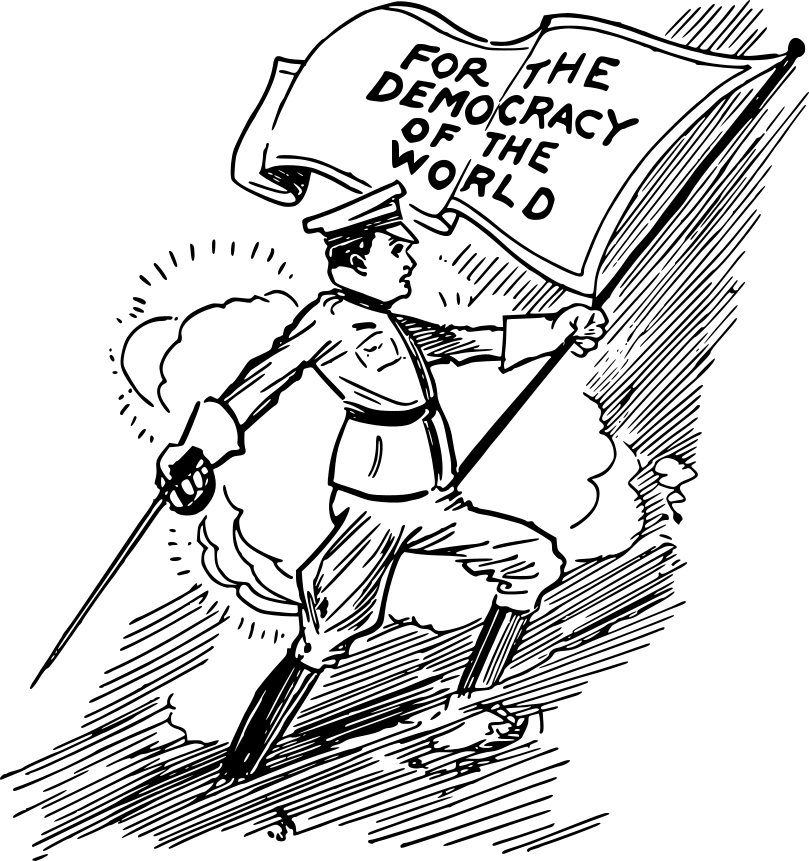
Democracy is a form of government in which the people have the authority to deliberate and decide legislation, or to choose governing officials to do so.
Example: Democracy is the best way to run a country.
en: Démocratie
Dictator
Noun
A dictator is somebody who somebody control a country without democracy.
Example: North Korea is ruled by a dictator.
en: Dictateur
Election
Noun
An election is a formal group decision-making process by which a population chooses an individual or multiple individuals to hold public office. Elections have been the usual mechanism by which modern representative democracy has operated since the 17th century.
Example: The election will start soon in France.
en: Élection
Famine
Noun
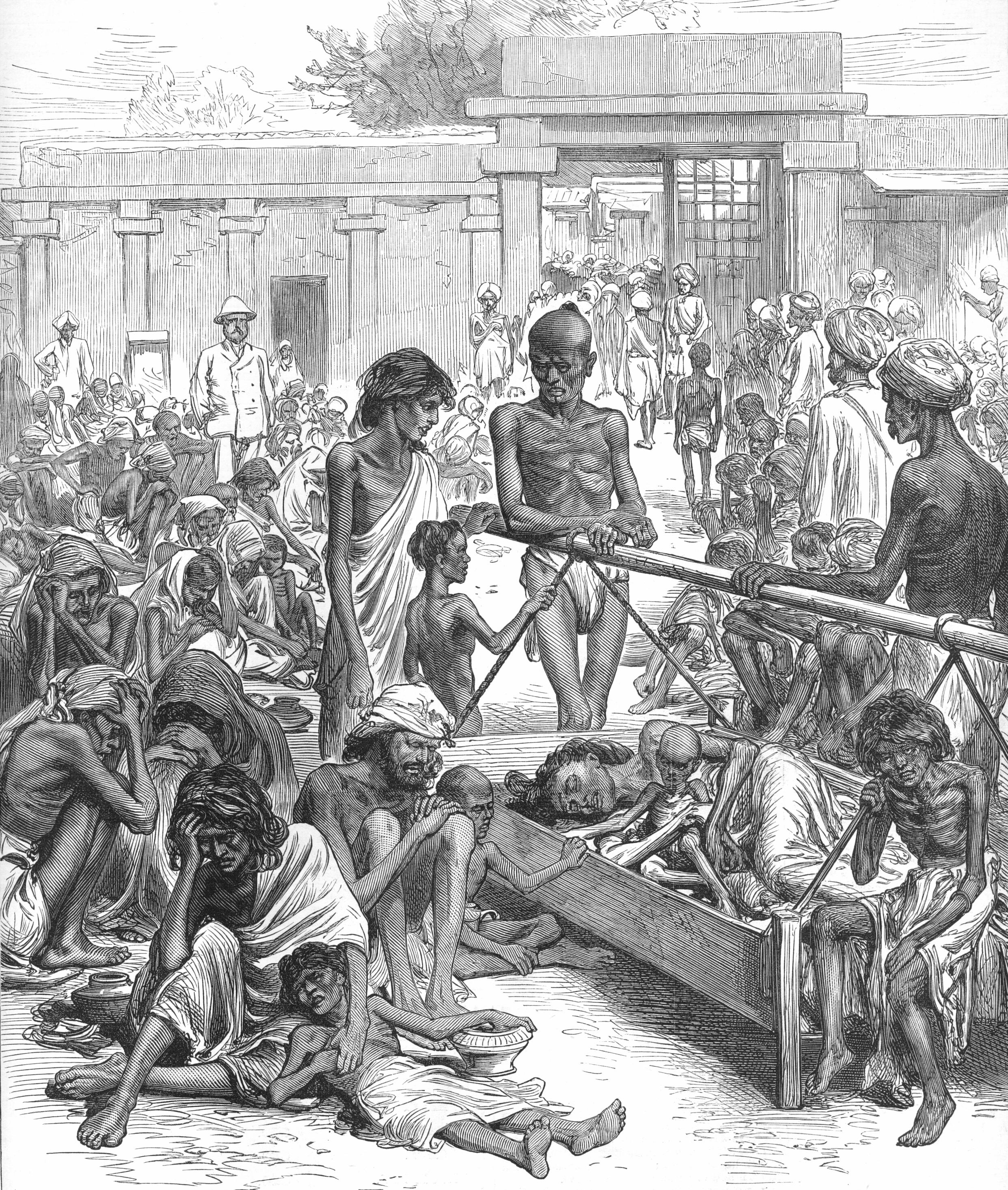
A famine is a widespread scarcity of food, caused by several factors including war, natural disasters, crop failure, population imbalance, widespread poverty, an economic catastrophe or government policies.
Example: Famine is very important in poor countries.
en: Famine
Genocide
Noun
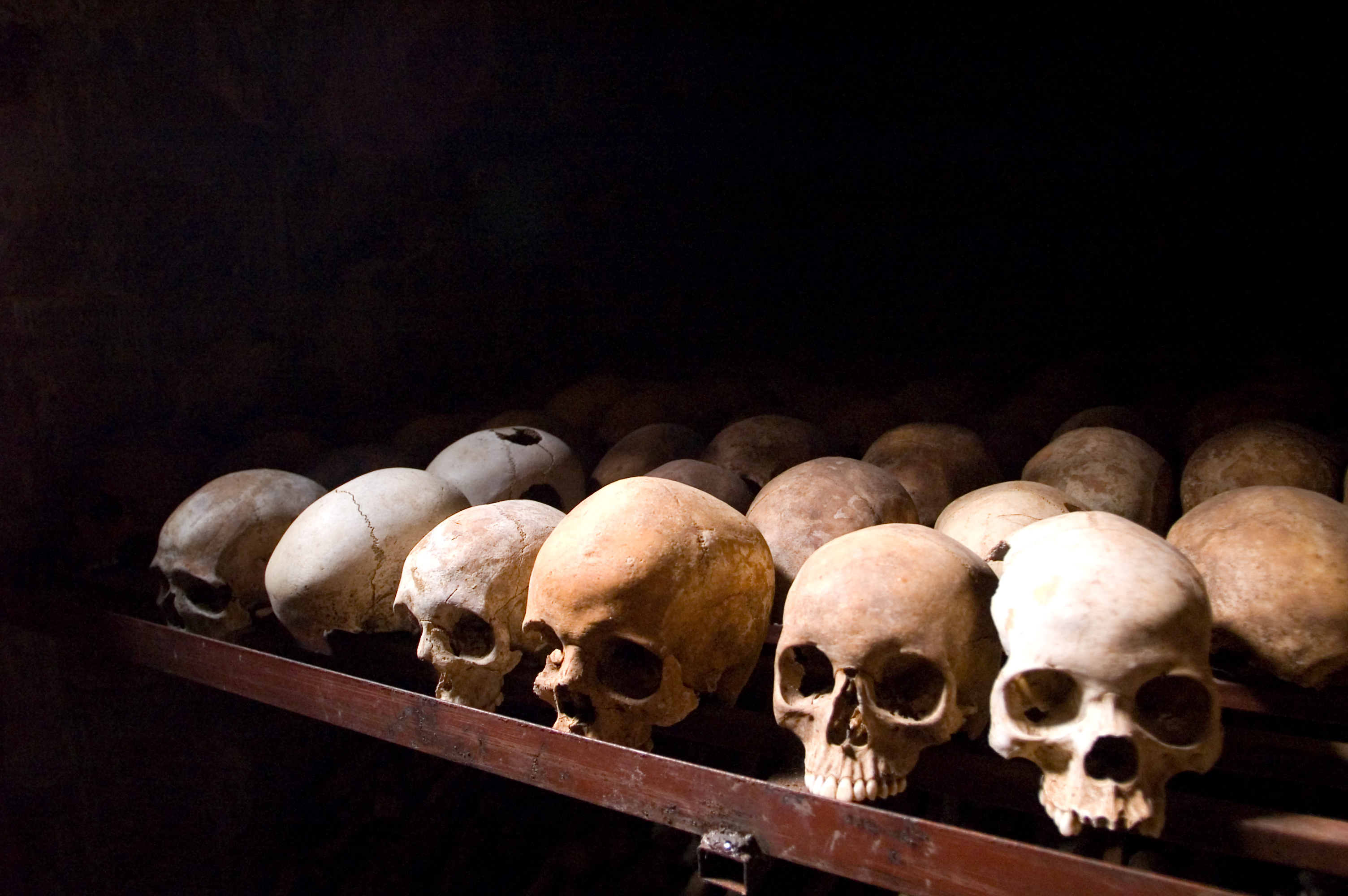
Genocide is the intentional destruction of a people, usually defined as an ethnic, national, racial, or religious group. Raphael Lemkin coined the term in 1944, combining the Greek word γένος (genos, "race, people") with the Latin suffix -caedo ("act of killing").
Example: Rwanda suffered a huge genocide
en: Génocide
Homeless
Noun
Homelessness is the condition of lacking stable, safe, and adequate housing. The definition of homelessness differs from country to country, with some countries yet to have any definition in place.
Example: During the winter being homeless is very difficult.
en: Sans abris
humanitarian aid
Noun
Humanitarian aid is material and logistic assistance to people who need help. It is usually short-term help until the long-term help by the government and other institutions replaces it. Among the people in need are the homeless, refugees, and victims of natural disasters, wars, and famines
Example: Humanitarian aid allows several countries to meet their needs well.
en: Aide humanitaire
Inequality
Noun
Inequality refers to the phenomenon of unequal and/or unjust distribution of resources and opportunities among members of a given society.
Example: The inequality of the are growing
en: Inégalité
Malnutrition
Noun
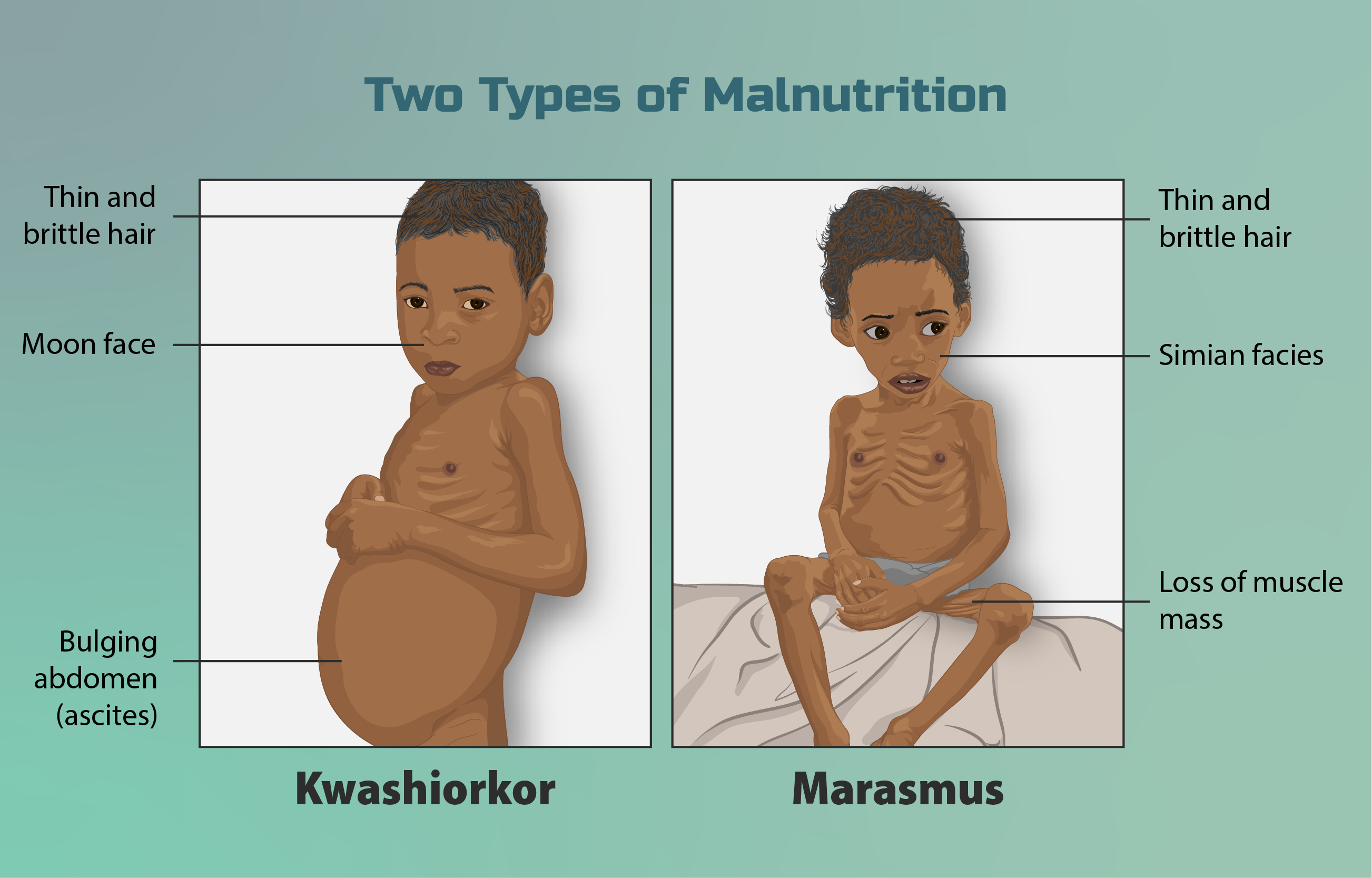
Malnutrition is the condition that develops when the body is deprived of vitamins, minerals and other nutrients it needs to maintain healthy tissues and organ function.
Example: The malnutrition is an important problem in many countries.
en: Malnutrition
Myth
Noun
Myth is a folklore genre consisting of narratives that play a fundamental role in a society, such as foundational tales or origin myths. The main characters in myths are usually non-humans, such as gods, demigods, and other supernatural figures
Example: Ancient Greece has several myths.
en: Mythe
Overcrowding
Noun
Overcrowding or crowding is the condition where more people are located within a given space than is considered tolerable from a safety and health perspective. Safety and health perspectives depend on current environments and on local cultural norms.
Example: The overcrowding can became a big problem in many years.
en: Surpopulation
Politics
Noun
Politics is the method of rulership over a national government, state government and local government in groups, or other forms of ruling power relations among individuals, such as the distribution of resources or status.
Example: Politics is a complicated thing.
en: Politique
President
Noun
The president of the United States is the head of state and head of government of the United States of America. The president directs the executive branch of the federal government and is the commander-in-chief of the United States Armed Forces.
Example: The president of the united state is Joseph R. Biden.
en: Président
Slavery
Noun
Slavery and enslavement are both the state and the condition of being a slave, who is someone forbidden to quit their service for an enslaver, and who is treated by the enslaver as their property.
Example: Slavery is a huge problem in many country around the world.
en: Esclavage
Third world
Noun
The term "Third World" arose during the Cold War to define countries that remained non-aligned with either NATO or the Warsaw Pact.
en: Tiers monde
War
Noun
A state of armed conflict between different nations or states or different groups within a nation or state.
Example: World War II destroyed several countries.